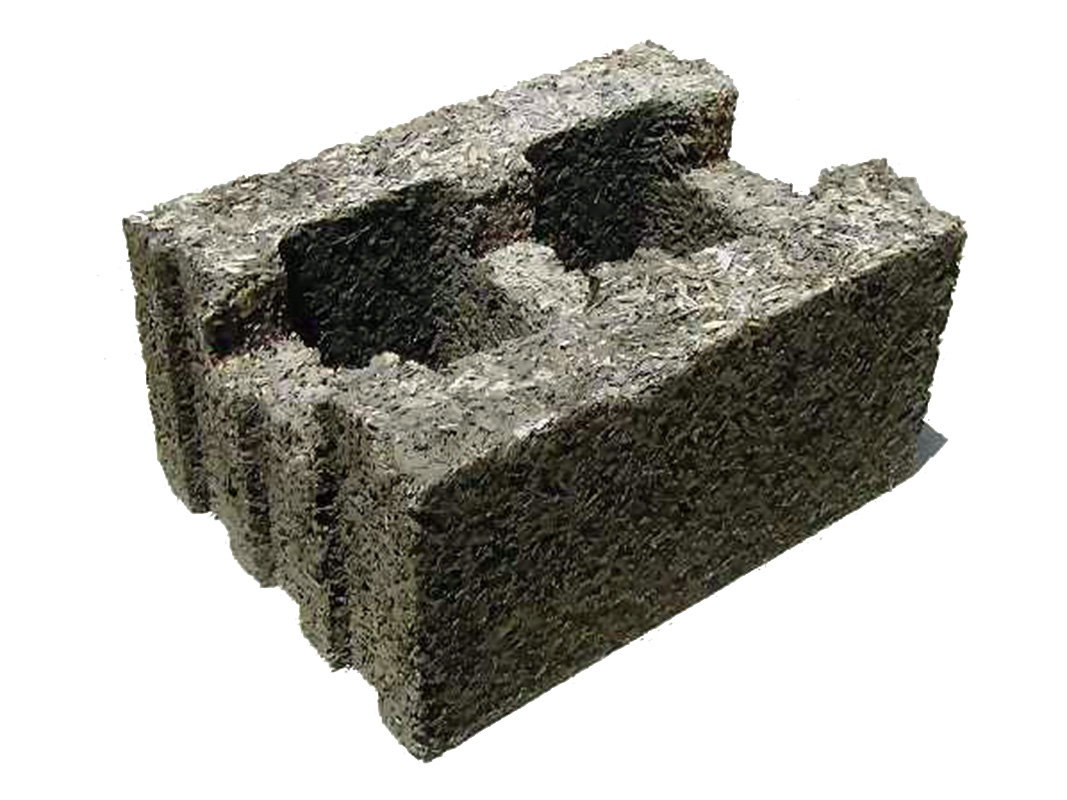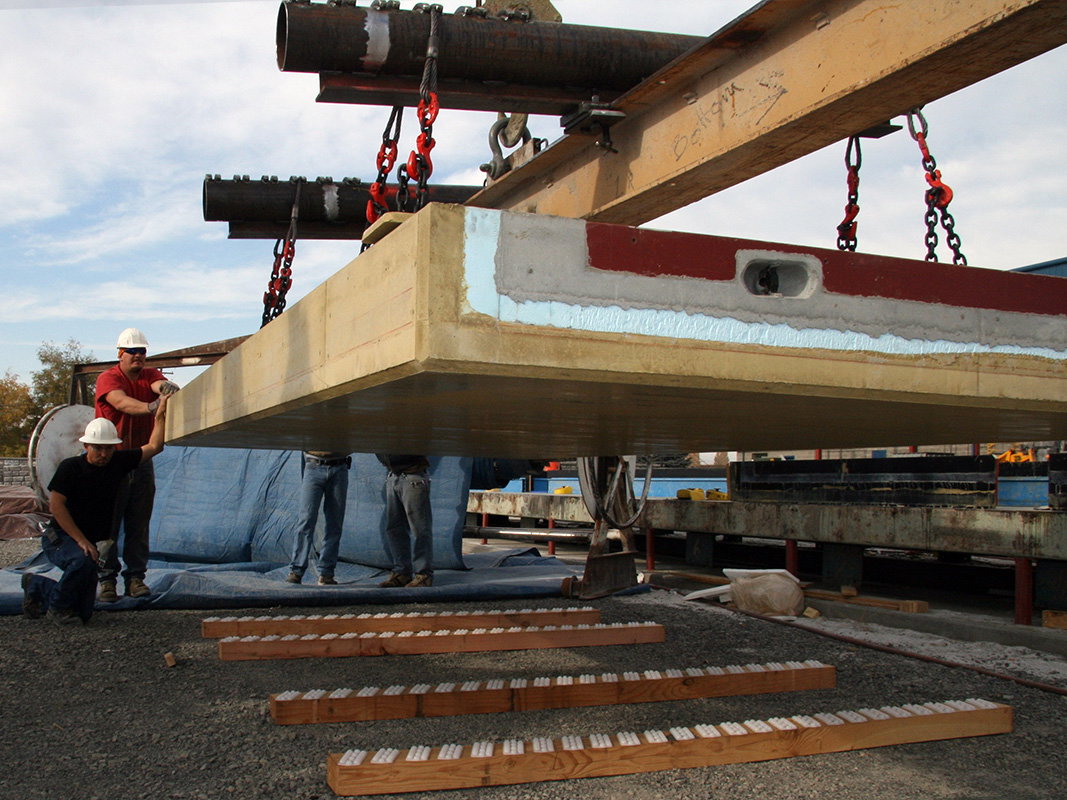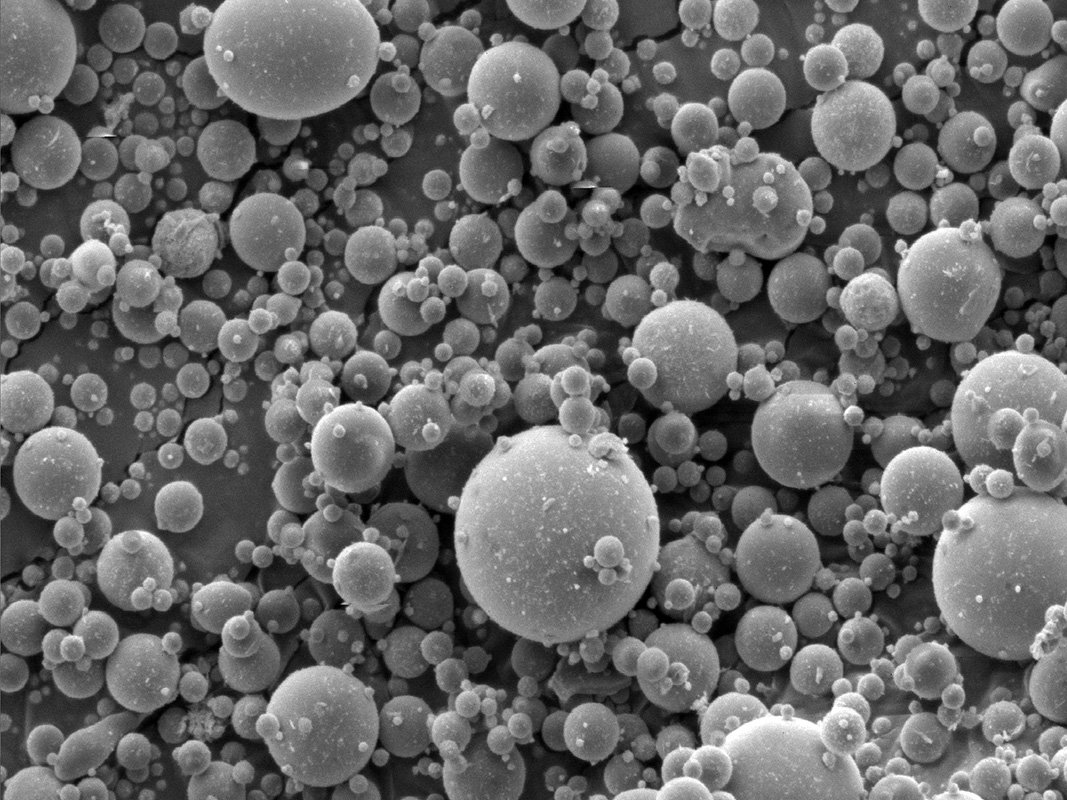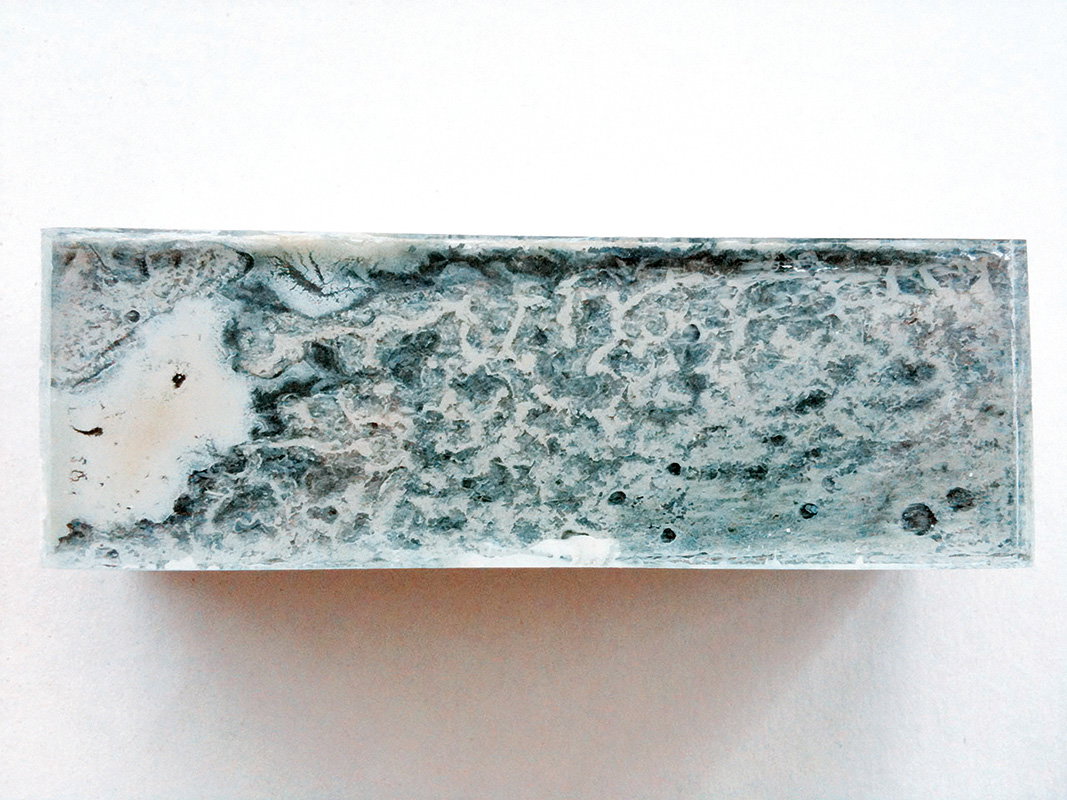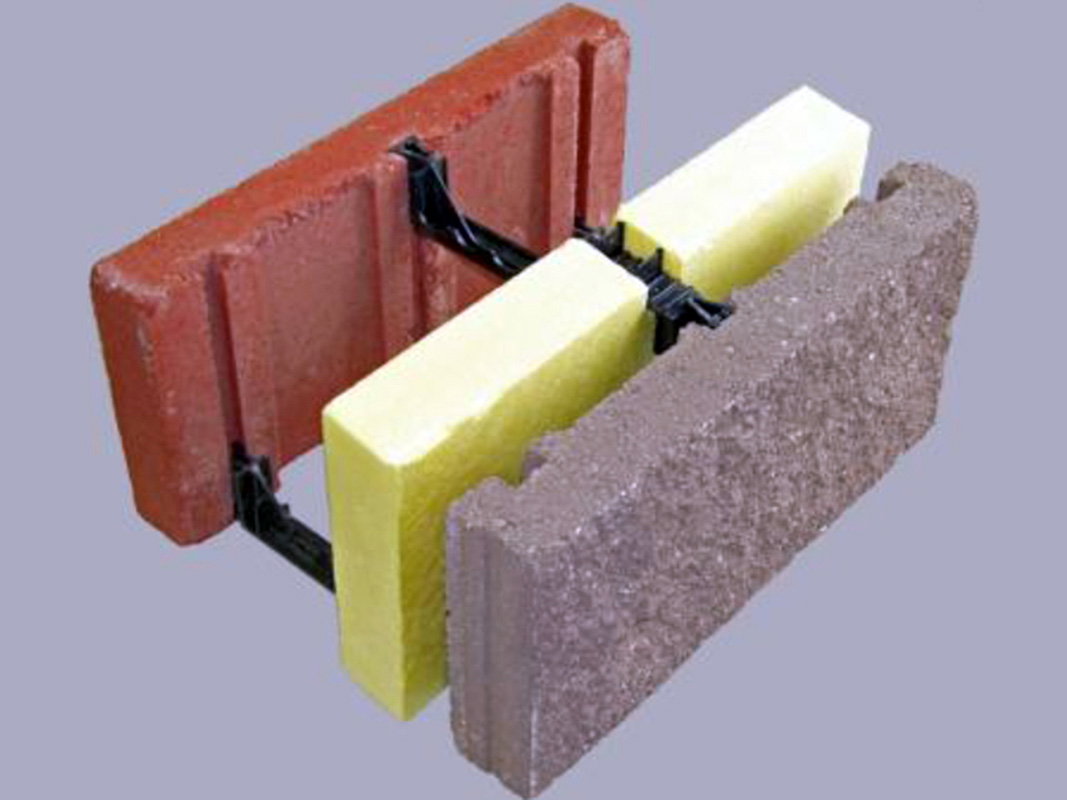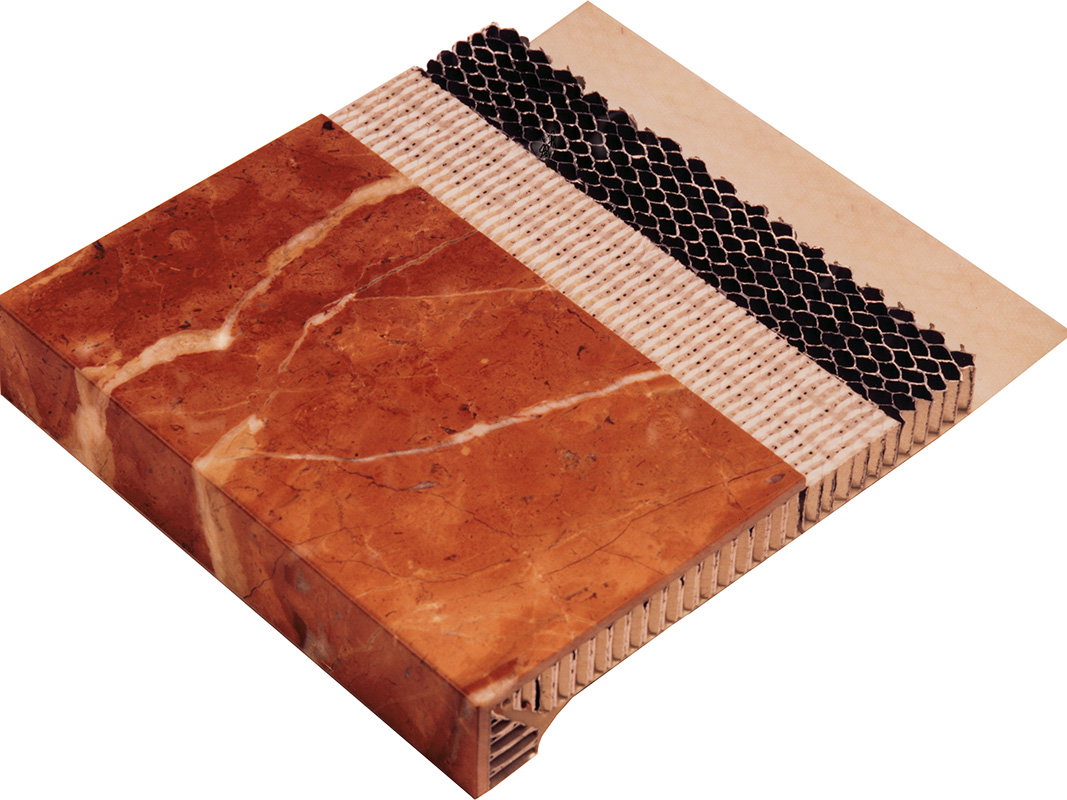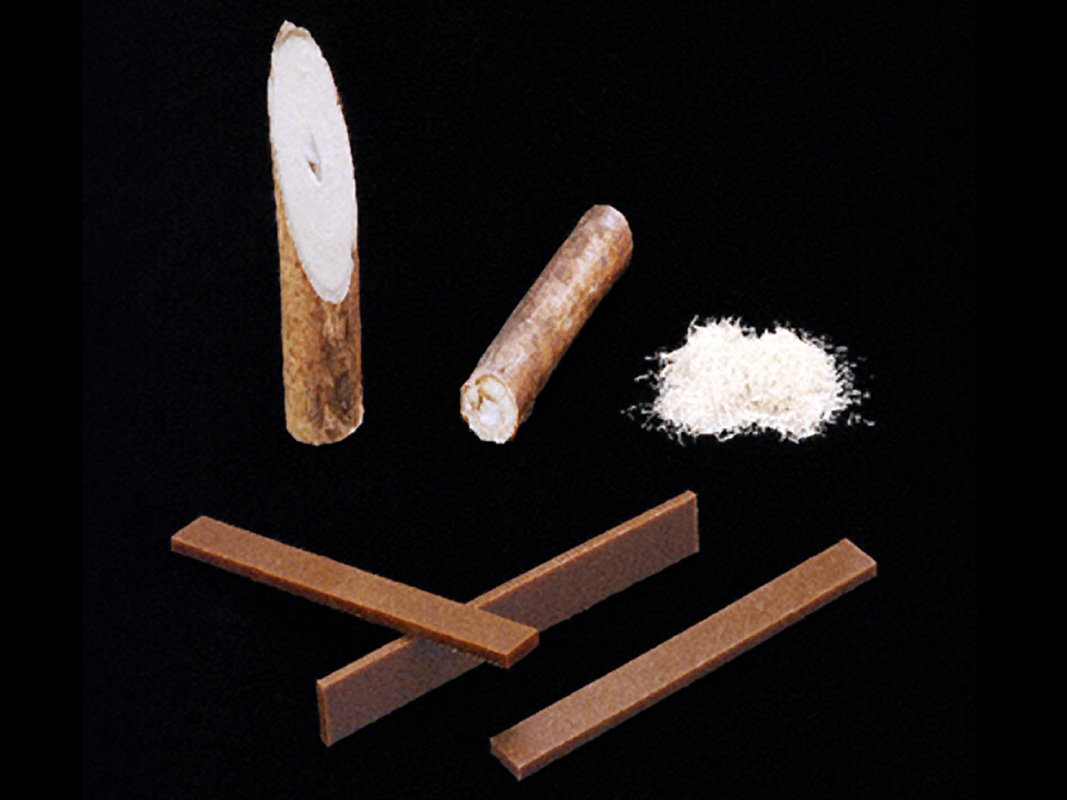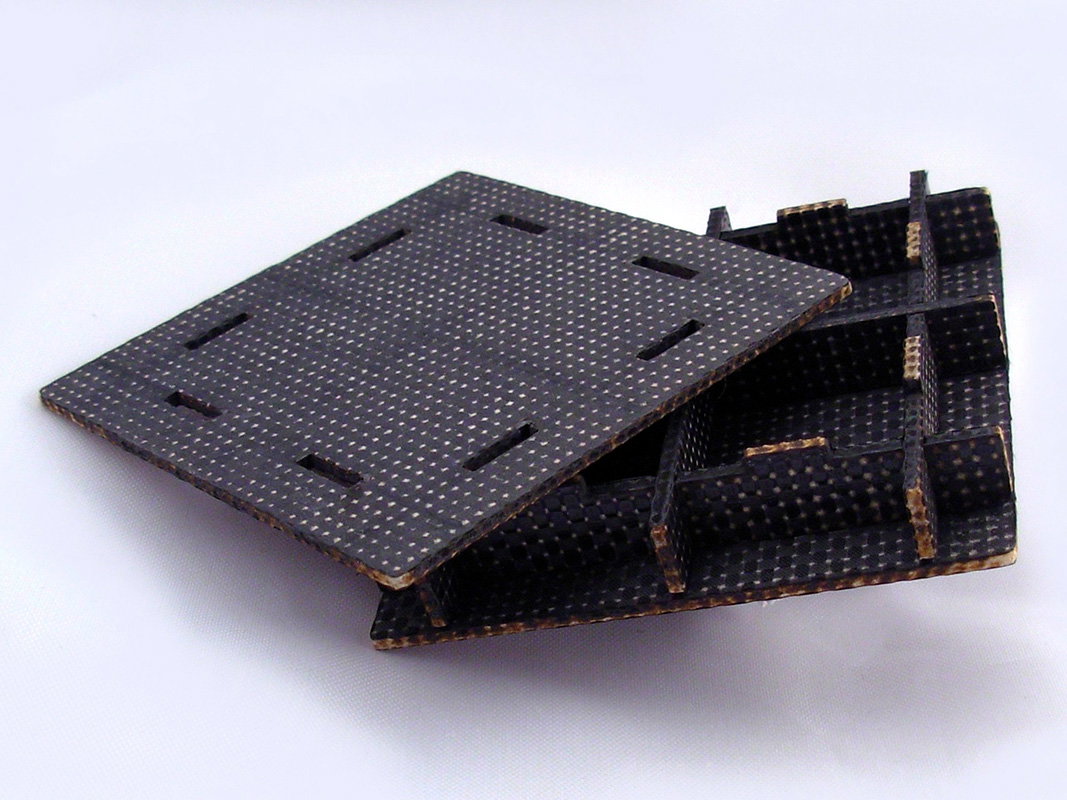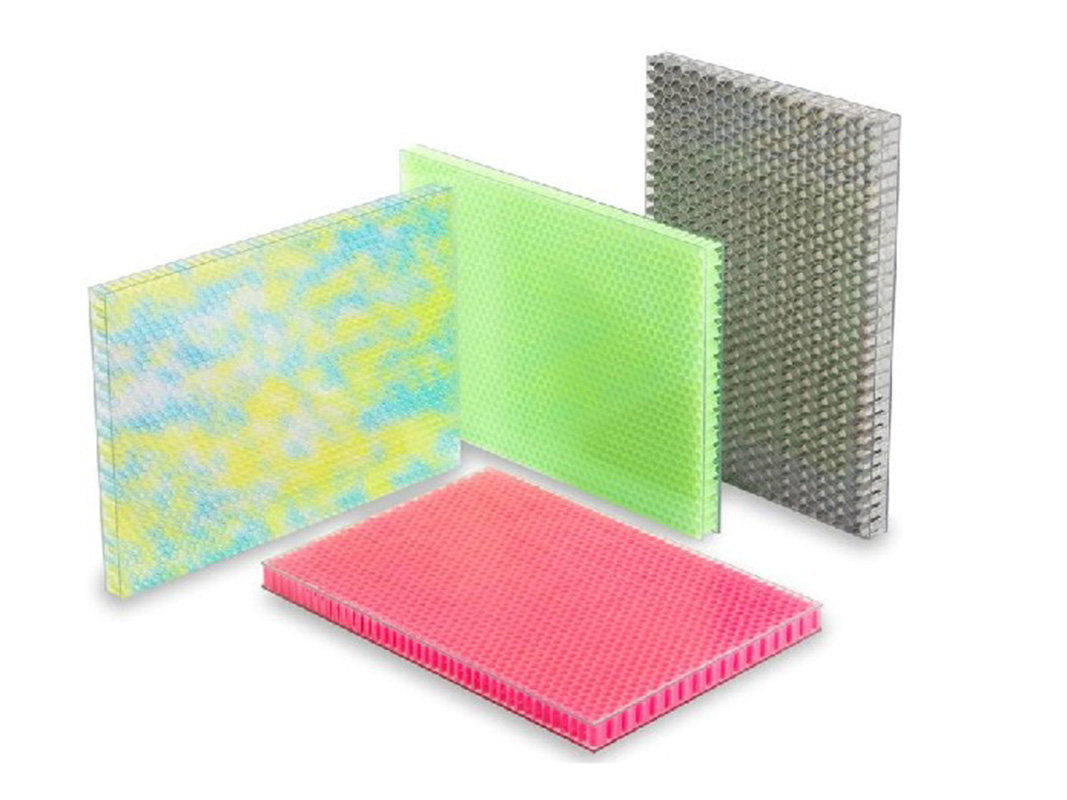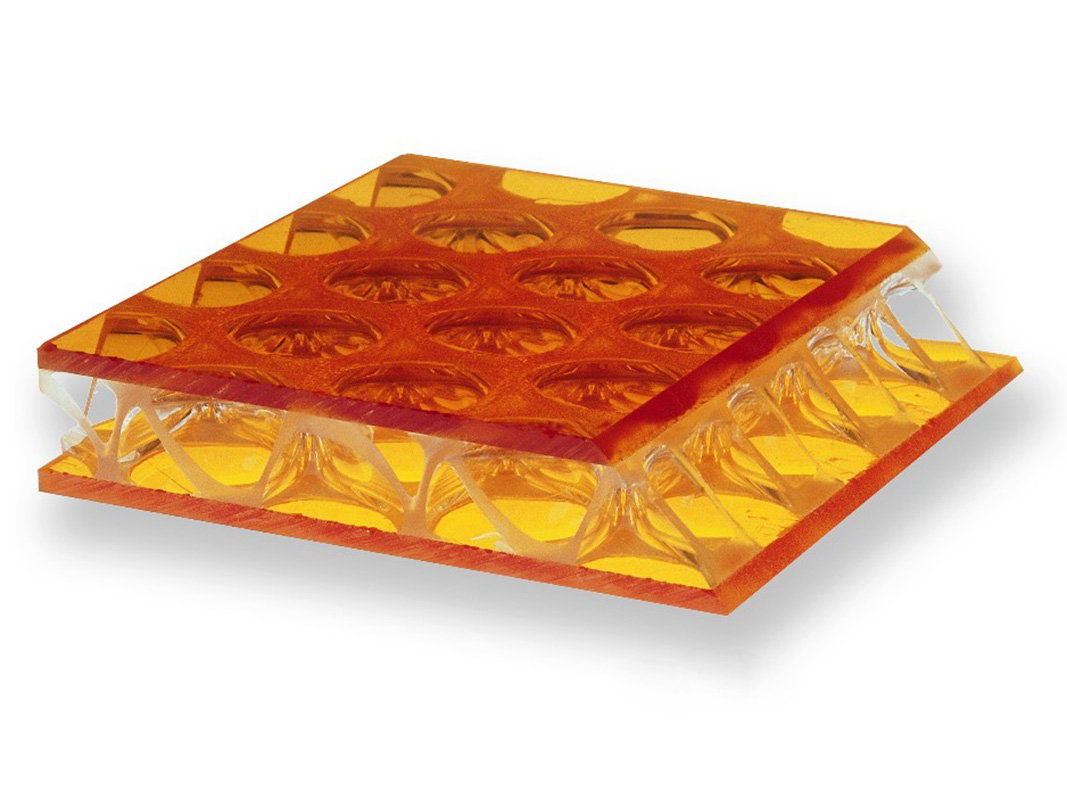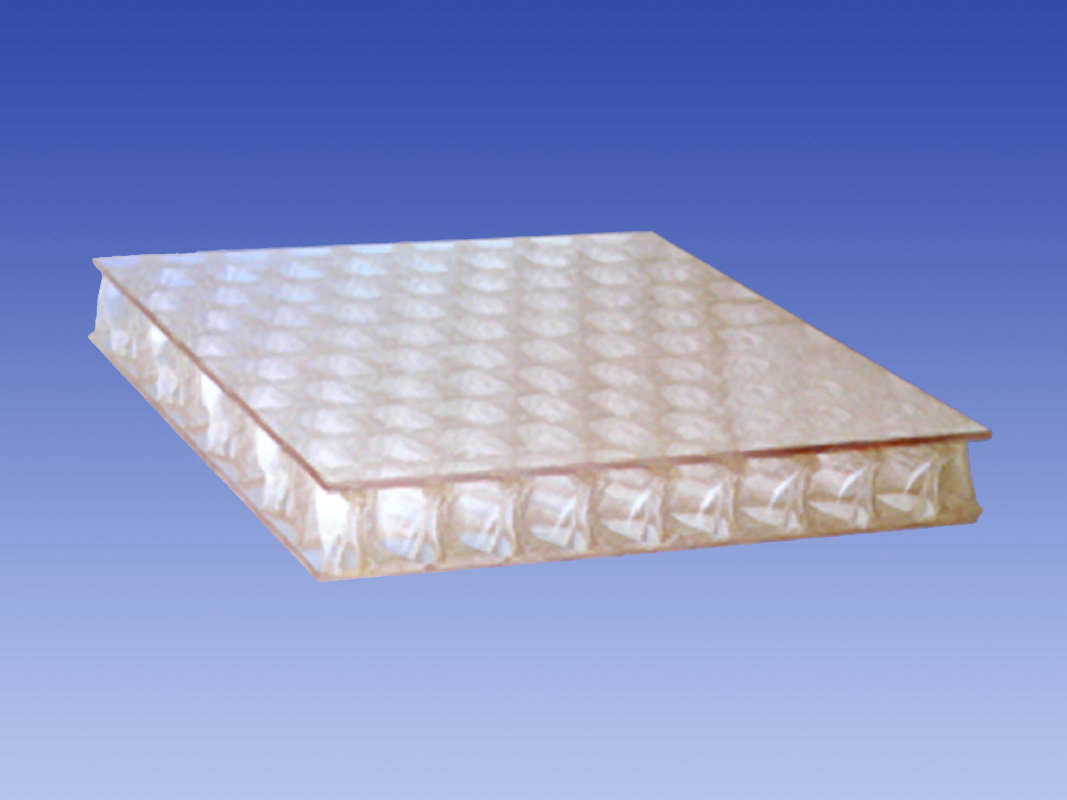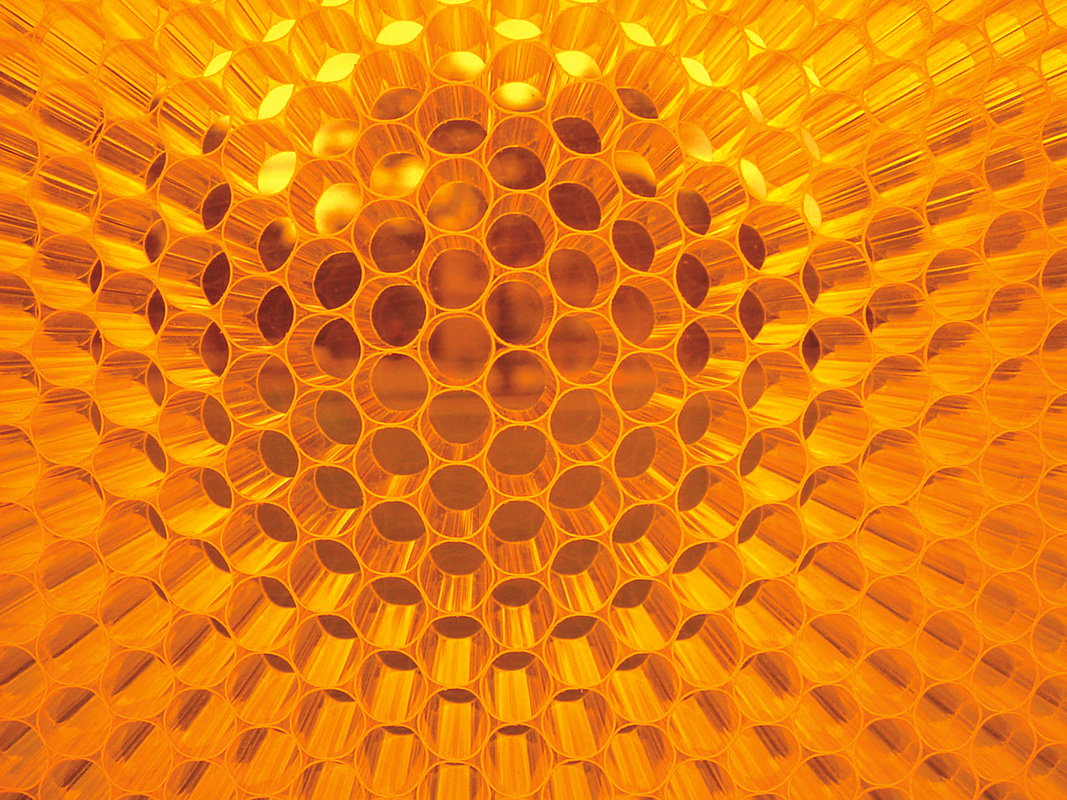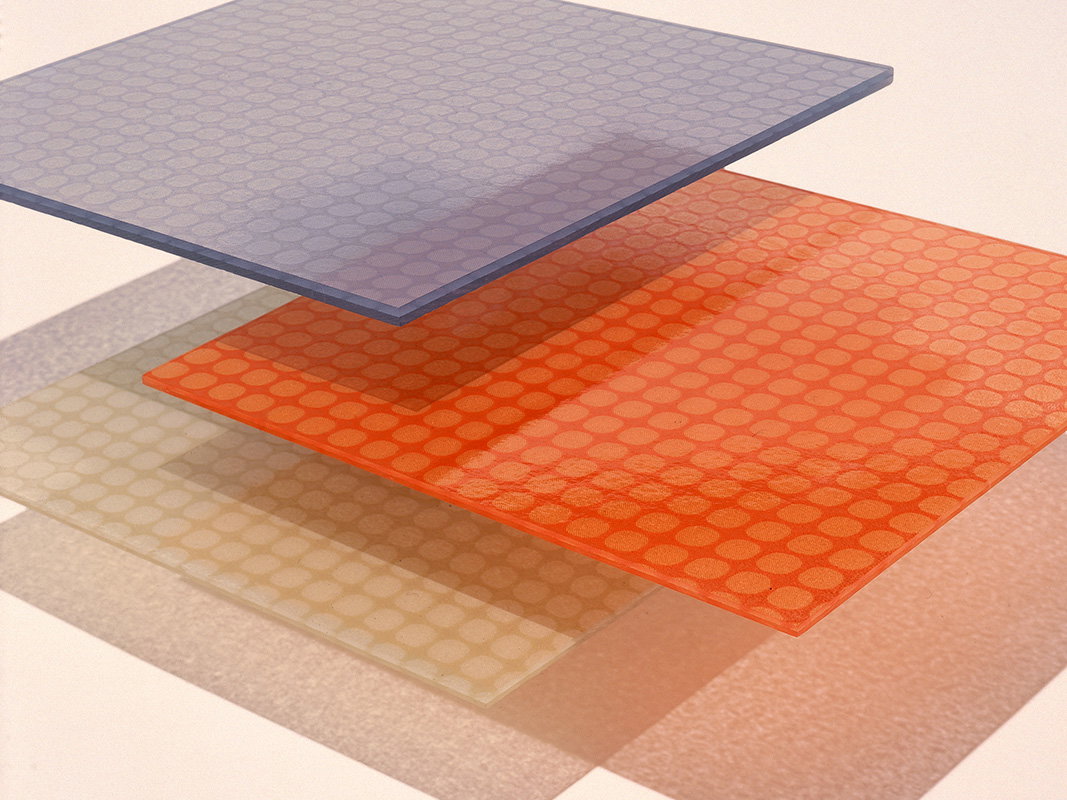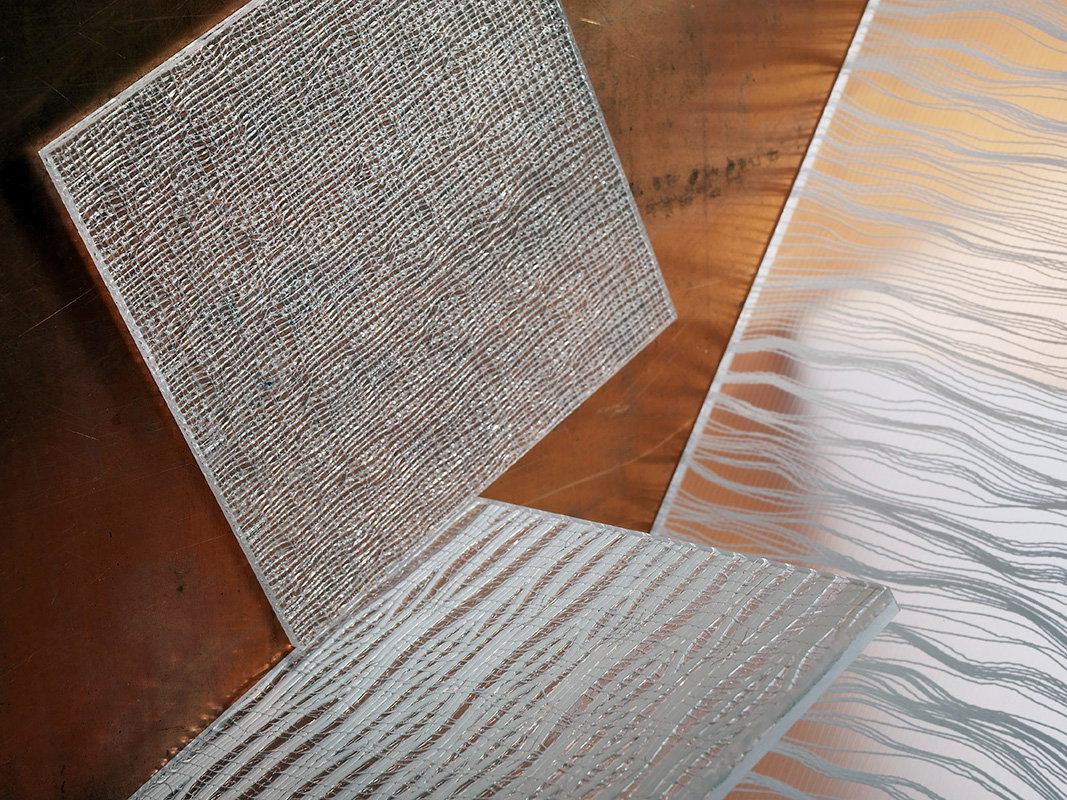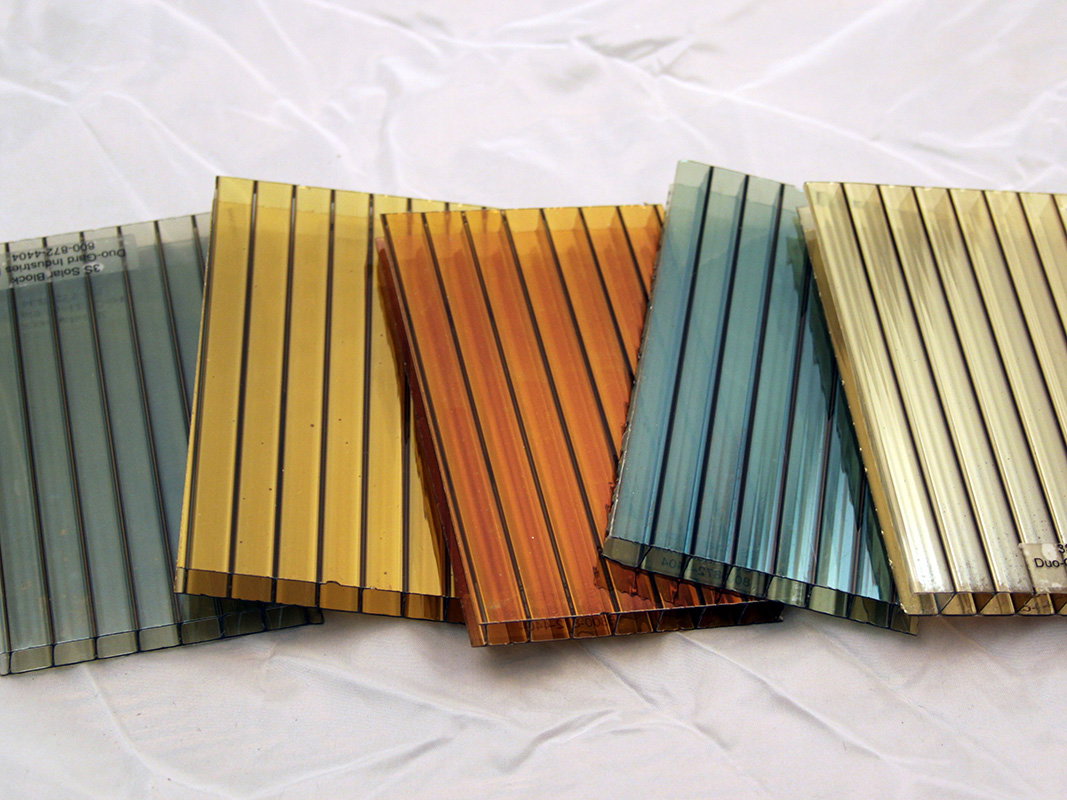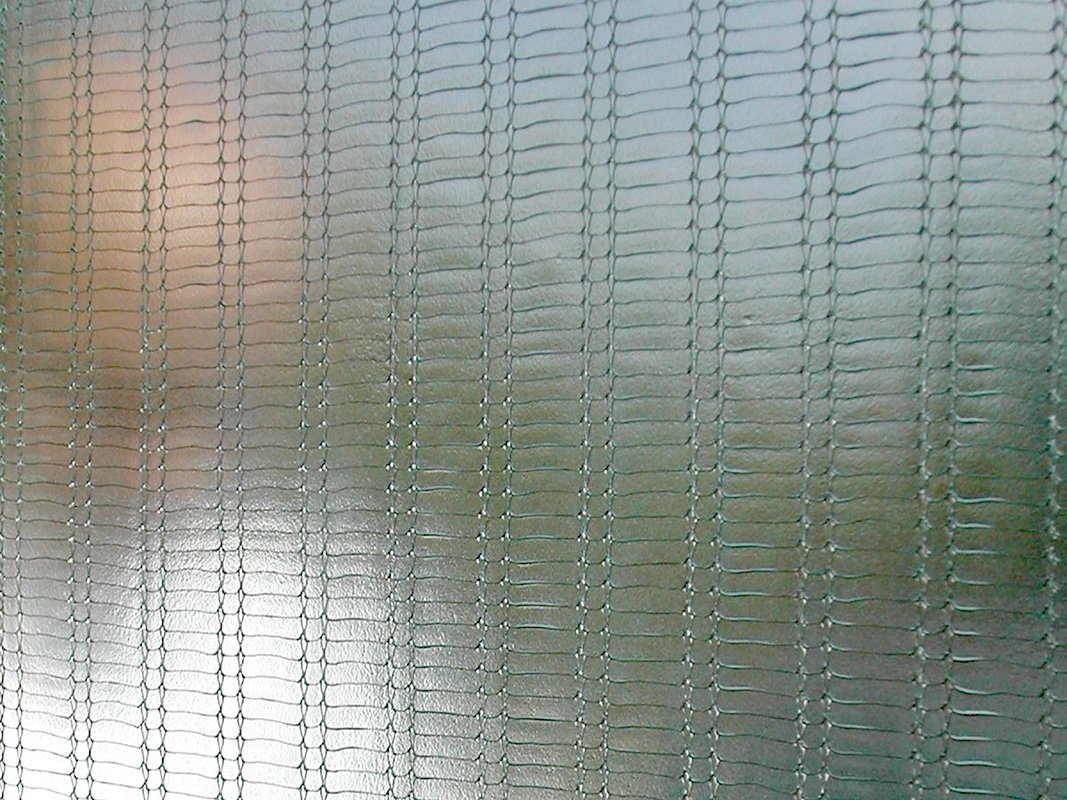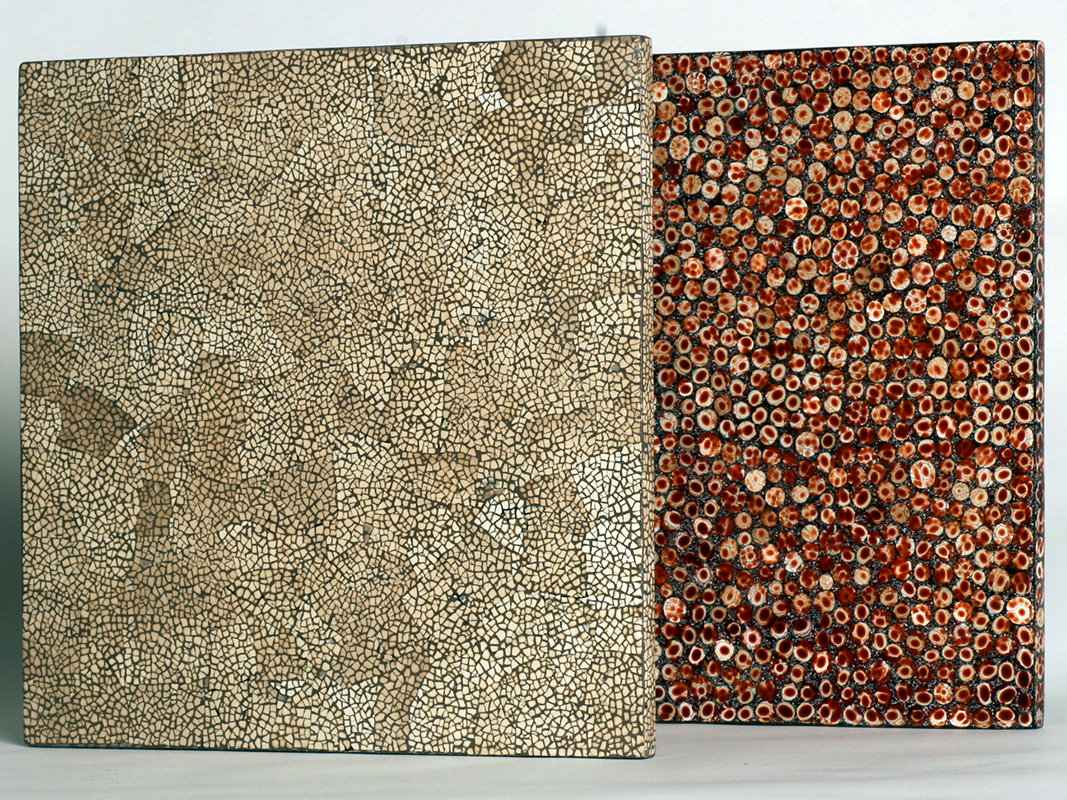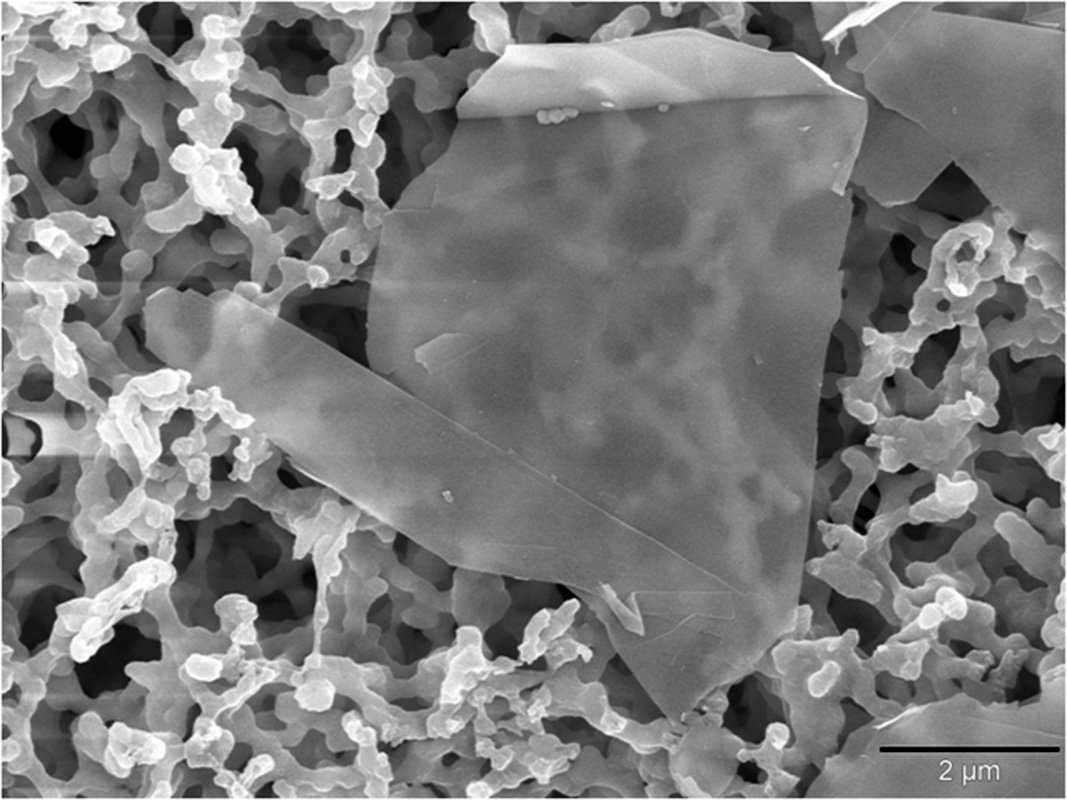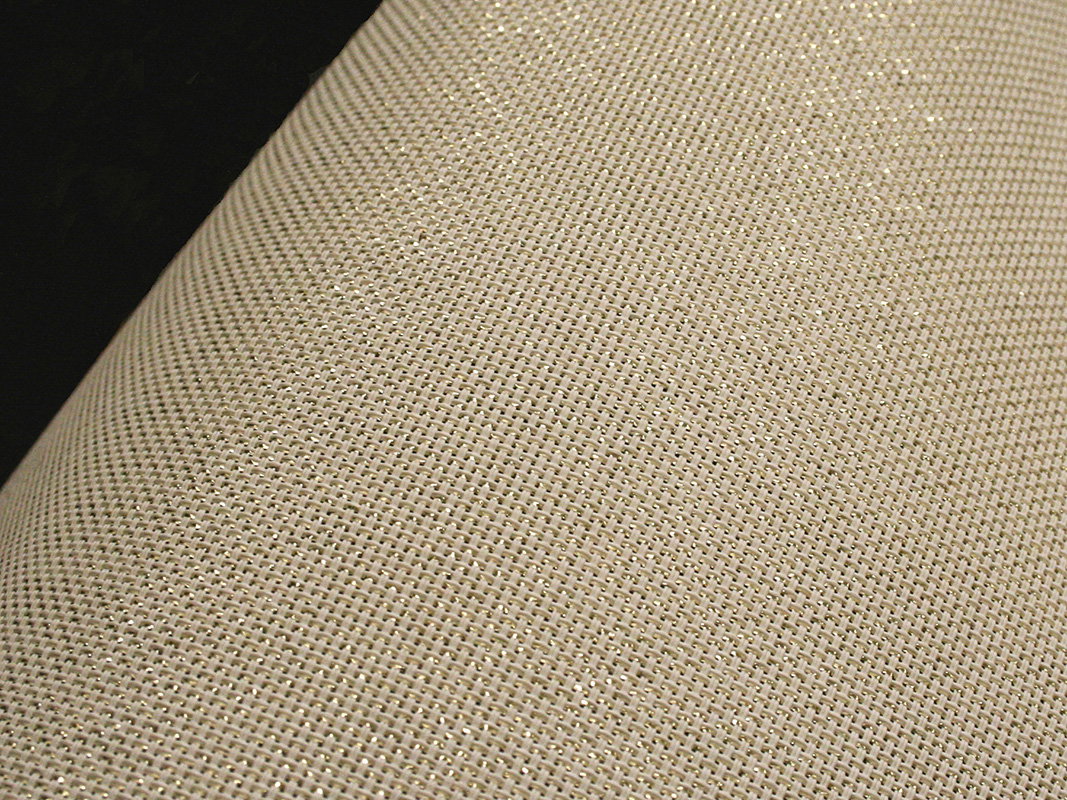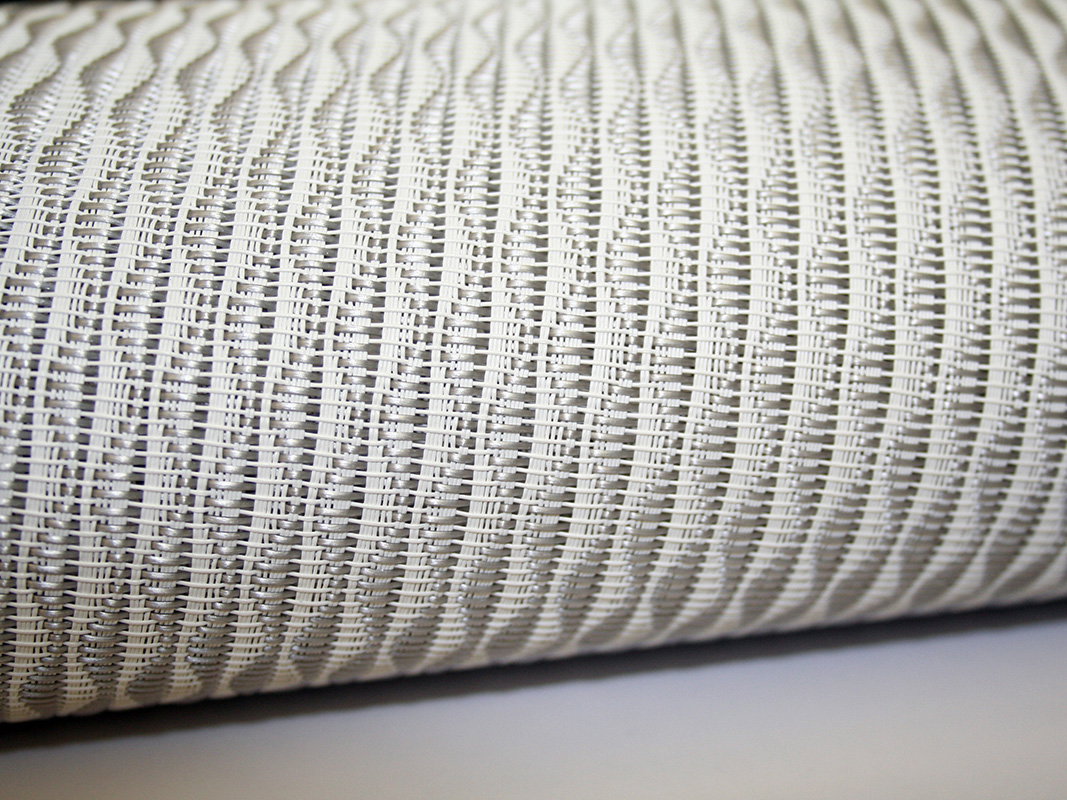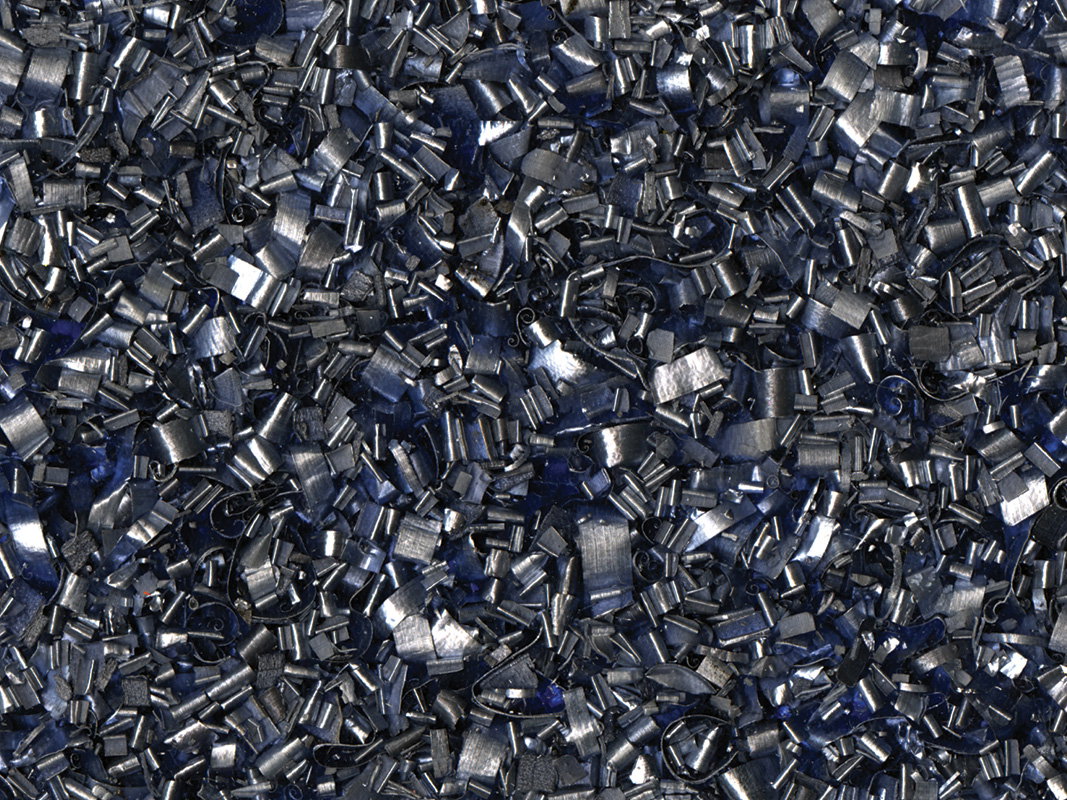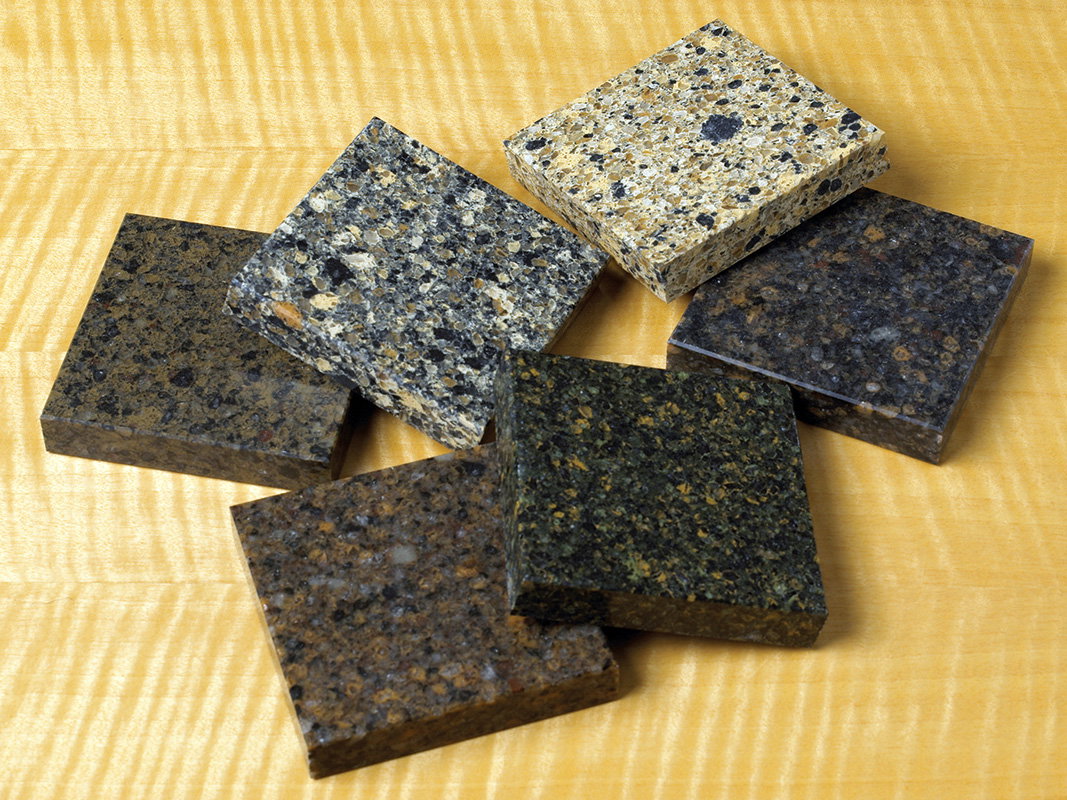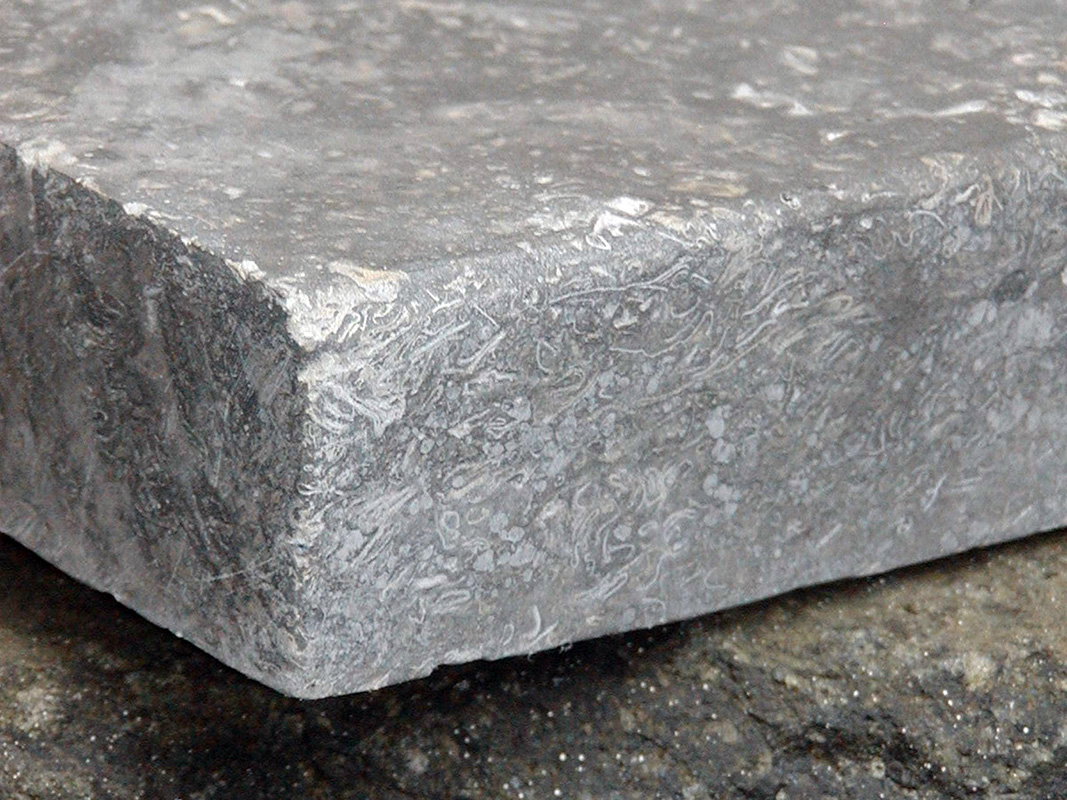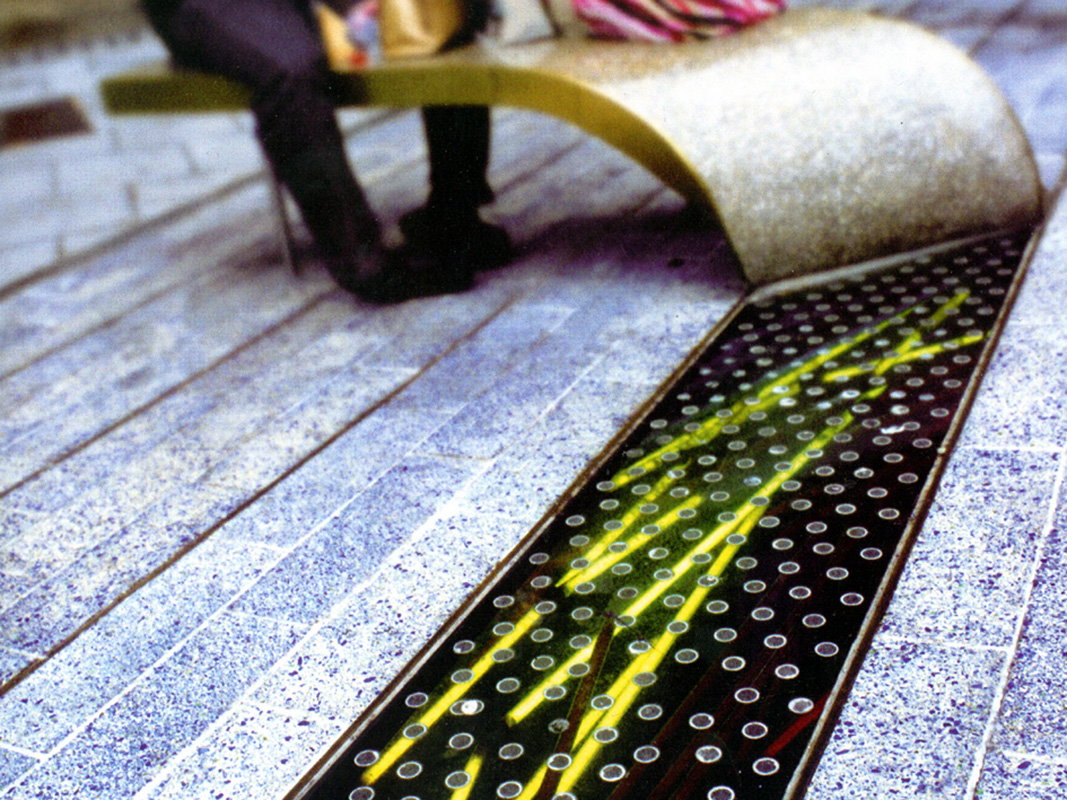
Recombinant materials consist of two or more different materials that act in harmony to create a product whose performance is greater than the sum of its parts. Such hybrids are created when inexpensive or recyclable products are used as filler, when a combination allows for the achievement of multiple functions, when a precious resource may be emulated by combining less-precious materials, or when different materials act in symbiosis to exhibit high-performance characteristics.
Recombinant materials have long proved their performance in the construction industry. Reinforced concrete, which benefits from the compressive strength and fireproof qualities of concrete and the tensile strength of steel, is a classic recombination. These materials often consist of downcycled components, which may be difficult if not impossible to reextract, and the success of recombinant materials is based on their reliable integration, which is not always predictable. However, the continued value exhibited by many such hybrids is reason for recombinant materials’ growing popularity.