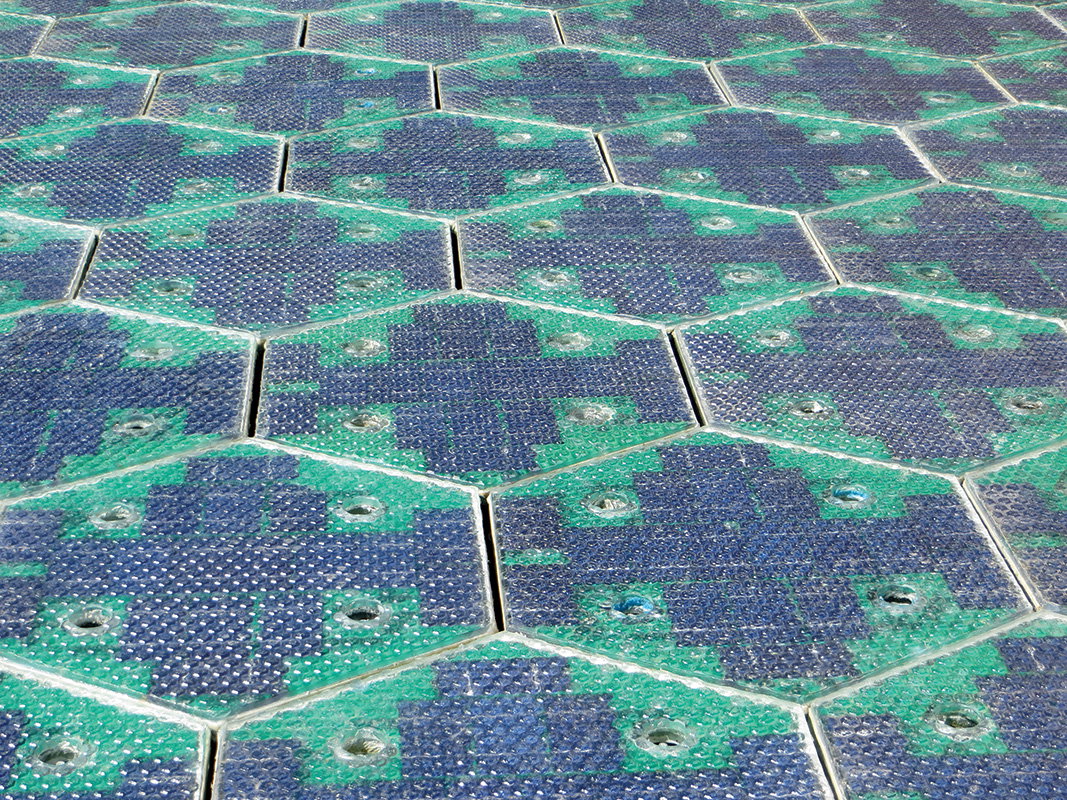
Electricity-generating solar road modules
To be most effective, solar power requires an expansive area for energy harvesting as well as a limited distance across which it must convey the electricity produced, to avoid significant signal reduction. Solar farms produce large quantities of energy but typically exist in the hinterland due to space requirements—a location that necessitates long-distance travel for power delivery. Developed by Idaho-based inventors Julie and Scott Brusaw, Solar Roadways combines solar power generation with road infrastructure. Based on their assessment that there are 27,800 mi.2 (72,000 sq. km of concrete and asphalt paving in the United States alone, the Brusaws created a multifunctional paving module that—if used to replace traditional paving—would generate up to three times the country’s current electricity demand. The interlocking, hexagon-shaped pavers are surfaced with durable textured glass and contain layers of photovoltaics, sensors, and LEDs. Harvested energy may be used to power homes and businesses served by the roadways, illuminate lane lines and signage, and melt snow and ice on the road surface. The entrepreneurs are also developing ways to power electric cars through the road’s surface, either via direct induction in self-charging wheels or with charging stations in parking lots.
High-strength glass, photovoltaics, sensors, LEDs, heating elements
Roads, bicycle paths, sidewalks, parking lots and solar-exposed structured parking; renewable power generation
Each hexagonal paver is 4.39 SF (0.41 m2) and generates 48 watts of electricity
Net zero electricity generation, reduced power necessary for road lighting, reduced material resources required for winter road maintenance
USDOT SBIR, Phase II SBIR, Phase IIB contraqcts
Costlier than conventional roadbed construction
Potential to combine renewable power generation and vehicular infrastructure with far-reaching environmental, economic, and safety benefits
Scott Brusaw, Julie Brusaw
Solar Roadways