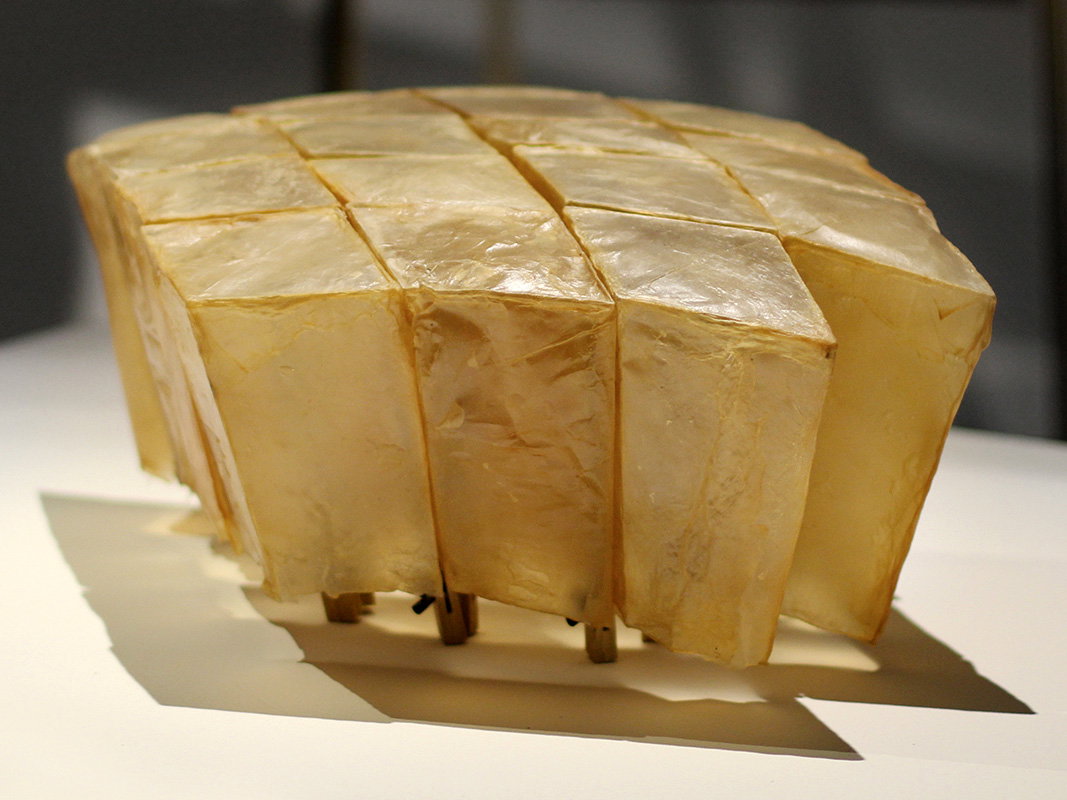
Geometric cellulose objects
Xylinum Cones are the result of a production process that utilizes living organisms to grow geometrical objects. Designers Jannis Hülsen and Stefan Schwabe work with bacterial cellulose, an organic material produced by particular kinds of bacteria, to explore the fabrication of new biotechnological materials and modular objects. Within a growth period of three weeks, each cellulose cone ripens within a suspended mold. At this time, different material properties can be added via simple chemical processes. The shapes of the cones reference common natural geometries, such as reptile scales or flower seeds—which have analogs in building products such as roof tiles or clapboards. The designers' primary goals for the Xylinum Cones are to explore the architectural implications of living matter and to achieve a balance between geometric precision and natural diversity in biological objects.
Bacterial cellulose
Geometric objects
Variable
Biocompatible, biodegradable, recyclable
Subject to natural degradation processes
Development of novel methods and applications for products composed of living materials
Jannis Hülsen, Stefan Schwabe
Jannis Hülsen