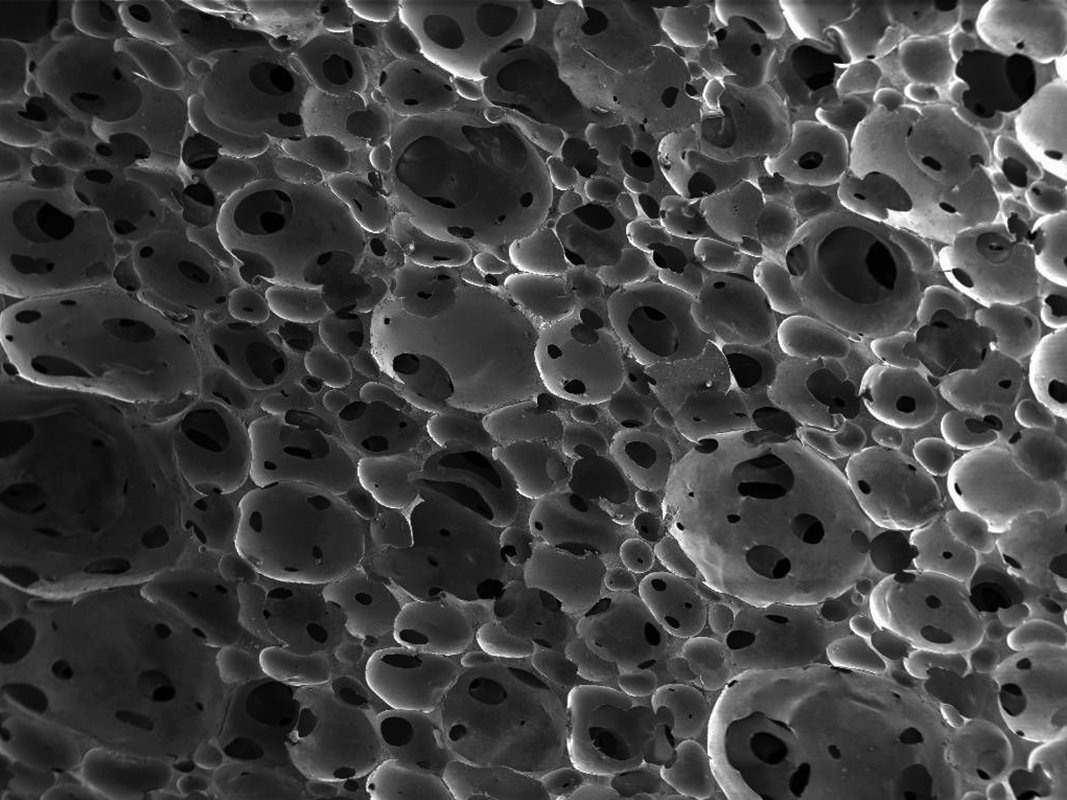
Bio-based flexible and rigid foams
The Center for Composite Materials has synthesized flexible/rigid polyurethane foams from soybean oil polyols. The advantage of these foams is that they can replace petroleum-based materials (synthetic polyols) and can be used for many applications. The morphology of the foams can be controlled by several factors: the type and functionality of the soybean oil polyols, the type of curing agents, the amount of water, and the amount of catalyst. Both flexible and rigid foams can be developed from vegetable oils by implementing different processes. The biocontent of the foams varies from 33 to 96 weight percent. The use of this biodegradable, locally harvested, and renewable source has economic and environmental advantages that make it an attractive alternative to petroleum-based materials.
Chemically modified soybean oil (e.g. acrylated epoxidized soybean oil and soybean oil-based polyols)
Footwear, construction, cars, electronics, sporting goods, and many others
From inches to yards
Use of renewable resources, biodegradable
ASTM D1621, D1622, D3574, ASTM D3576
Relatively expensive
Richard P. Wool
University of Delaware