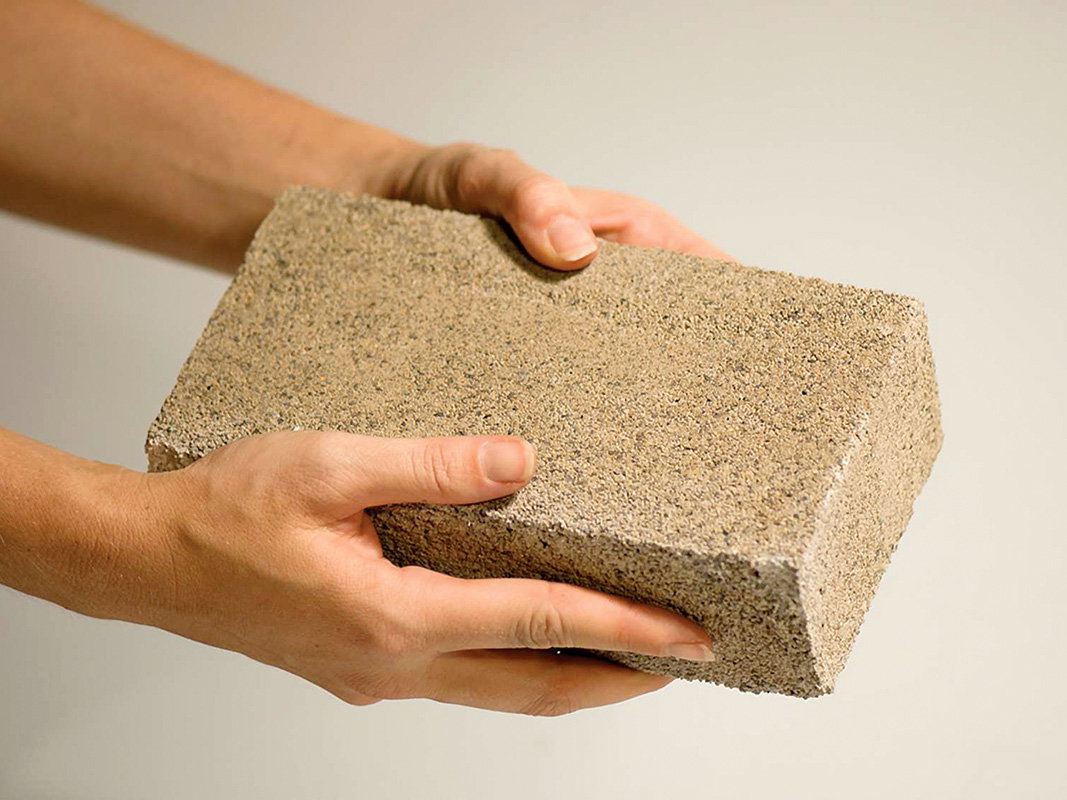
Biologically grown masonry
The standard architectural material palette consists of many energy-intensive materials, such as brick masonry and concrete. In contrast, nature exhibits notable strategies for creating high-strength materials via biochemical processes that require little energy. North Carolina–based bioMason has developed a technology based on such an approach, employing bacteria to produce bricks out of sand or other types of aggregate. Similar in composition to sandstone, the resulting BioBricks are manufactured by Sporosarcina pasteurii bacteria with the addition of calcium chloride, urea, and yeast extract. These materials are inexpensive, widely available, and ecologically responsible, and they enable the fabrication of bio-based building modules in under five days.
Calcium chloride, sporosarcina pasteurii bacteria, yeast extract, urea
Load-bearing walls and vaulted ceilings (in lieu of standard brick masonry)
Standard brick shapes, custom sizes available
Net zero production of masonry units using abundant, non-toxic materials
Successful tests have been conducted using seawater
Currently limited to small-volume production
Dramatic reduction in energy use, fuel consumption, and CO2 emissions associated with conventional kiln-fired brick; industrial materials will increasingly be grown instead of heat-processed
Ginger Krieg Dosier
bioMASON